

At a glance: underfloor heating from Poland
- 🔥 The other half of the nZEB services package: MVHR handles the air, underfloor heating handles the heat — and both are specified around the same low-energy, heat-pump-led build.
- 🏭 A complete kit, not just pipe: Polish manufacturers supply PE-RT and PEX pipe, manifolds, actuators, edge strip, system panels and the screed additives in one consolidated order.
- 📐 Low flow temperature is the point: underfloor heating works at a much lower water temperature than radiators, which is exactly what makes it a natural pairing with an air-to-water heat pump.
- 🧱 The floor build-up decides everything: insulation below, pipe spacing, screed depth and the final floor finish all interact — get the build-up wrong and no amount of good pipe fixes it.
Why underfloor heating is the next question after MVHR
Last week's guide on MVHR looked at how a tightly sealed Irish nZEB build supplies fresh air without throwing away heat. Underfloor heating is the question that almost always follows it: once the envelope is insulated and sealed, the heat demand drops far enough that a low-temperature emitter becomes viable — and a wet underfloor system running at low flow temperatures is the emitter that pairs best with the air-to-water heat pumps now common on Irish sites.
Poland manufactures the full range of wet underfloor heating components at scale — pipe, manifolds, system panels and controls — which makes it practical to source a complete system for a house or a multi-unit scheme as a single consolidated delivery rather than assembling it from several Irish merchant orders.
1. Pipe and manifolds: what to specify
- Pipe type: PE-RT and PEX-a are the two most common choices for wet systems; both need an oxygen diffusion barrier where the circuit feeds a system with ferrous components.
- Pipe diameter and spacing: typically specified per room from the heat loss calculation — tighter spacing in bathrooms and rooms with large glazed areas, wider in well-insulated internal rooms.
- Manifold material and ports: stainless steel manifolds with flow meters on each circuit let you balance the system properly; count the ports against your circuit schedule before ordering, not after.
- Actuators and controls: confirm the actuator voltage matches the wiring centre and thermostats you are using — mixing 230 V and 24 V components across suppliers is a common and avoidable site problem.
2. Insulation below the pipe, and the edge strip around it
An underfloor heating circuit radiates in every direction, so the insulation layer beneath it is what forces the heat upward instead of into the ground. This is where the XPS and floor insulation covered in our earlier foundation guide does its work — and it is worth specifying the floor insulation and the heating system together, because the total build-up height is fixed early by door thresholds and stair rises.
The edge insulation strip around the perimeter matters just as much and is the item most often skimped on. It gives the heated screed room to expand and stops the slab from driving heat straight into the external wall.
The fix: run continuous perimeter edge strip around every room and every column or upstand before the screed goes down, and trim it only after the floor finish is laid — cutting it early is how you end up with cracked screed at the perimeter.
3. Screed, drying and first heat-up
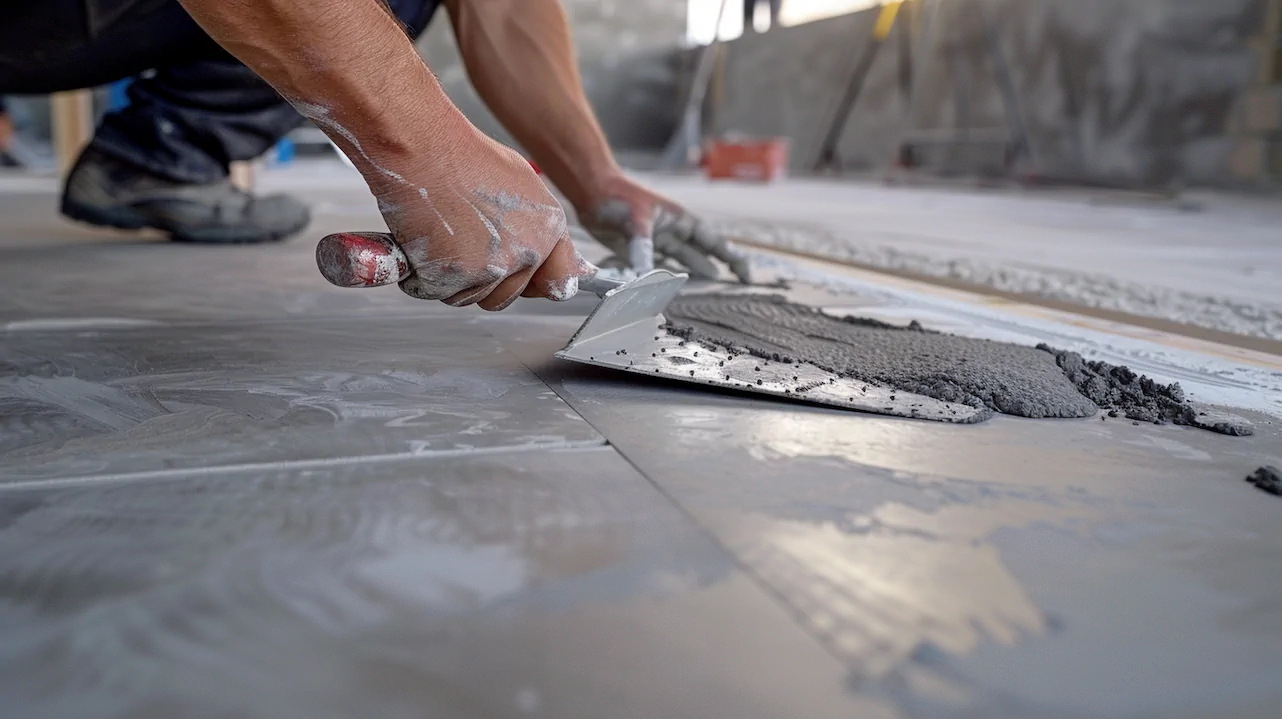
Screed depth over the pipe is a balance: deeper screed gives a more even, more stable heat output but responds more slowly and adds weight and drying time. Liquid (anhydrite) screeds allow thinner covers than traditional sand-cement, but need their own surface preparation before tiles or timber go down.
Whichever screed is used, the commissioning heat-up must be gradual and recorded — bringing a new heated screed straight up to working temperature is the classic cause of cracking. Check the screed manufacturer's own drying and heat-up schedule and the floor finish manufacturer's maximum surface temperature before you plan the programme, especially with engineered timber over a heated floor.
| Component | Key specification points | Why it matters |
|---|---|---|
| UFH pipe | Material (PE-RT / PEX), diameter, oxygen barrier | Determines circuit length limits and system compatibility |
| Manifold | Stainless steel, port count, flow meters per circuit | Allows the system to be balanced room by room |
| Floor insulation | Thickness, compressive strength, total build-up height | Sends heat upward and fixes threshold and stair levels |
| Edge strip | Continuous perimeter coverage before screed | Allows thermal expansion, prevents perimeter cracking |
| Screed | Type, cover depth over pipe, drying and heat-up schedule | Governs response time, output evenness and crack risk |
Planning an underfloor heating system for an Irish build?
Actitrade sources underfloor heating pipe, manifolds, insulation and screed products from established Polish manufacturers, checks the specification against your floor build-up and heat source, and consolidates it into one delivery to your Irish site.
Start with our building materials sourcing proposal or contact Actitrade to discuss your heating system.