

Winter in Ireland and the UK is rarely extreme, but it is cold, damp and unpredictable. For tilers, plasterers and EWI installers this matters more than for almost any other trade. The right cold weather tile adhesive, winter EWI adhesive or rapid-setting screed can keep a project moving. The wrong product can mean weak bonds, cracked renders and costly repairs in spring.
This guide explains how temperature affects construction chemicals, which winter products to choose and how to store materials safely on site.
Why temperature matters for construction chemicals
Cement-based adhesives, renders, screeds and grouts set through a chemical reaction with water called hydration. Cold slows it down. Frost stops it and can damage the fresh layer from the inside as water freezes and expands.
Most standard products are designed to be applied between +5°C and +25°C. This applies to three things at the same time:
- the air temperature
- the substrate – wall, floor or insulation board
- the material itself, including the mixing water
It also applies to the following hours, while the product sets. A sunny morning at +7°C followed by a frosty night is a risk for fresh render.
What changes in winter
- Longer setting times – tiles can be grouted and walked on later than the data sheet says for +20°C.
- Lower early strength – adhesives need more time before full load.
- Higher moisture – damp substrates and high humidity slow drying of renders, paints and screeds.
- Risk of efflorescence – white salt stains on cementitious renders and grouts in cold, damp conditions.
Choose winter and rapid-setting versions
Many Polish manufacturers offer special winter or rapid-setting versions of their products. They set faster and tolerate lower temperatures. Some can be applied at around 0°C – but each product has its own limits, so always check the technical data sheet (TDS).
Typical winter products:
- Cold weather tile adhesives – often class C2F (fast-setting) or winter versions of C2TE S1
- Fast-setting grouts – ready for traffic sooner
- Winter adhesives for EPS – for external wall insulation boards
- Rapid-setting screeds and repair mortars – for floors and patch repairs
- Antifreeze admixtures for concrete and mortar
Not sure what C2F or S1 means? See our guide Tile Adhesive Classes Explained: C1, C2, S1, S2.
External works: what to do and what to leave for spring
Facade work is the most sensitive to winter weather. Thin-coat renders and facade paints need dry weather and several frost-free hours after application.
A practical approach many contractors use:
- Fix insulation boards in winter, using winter adhesive on suitable days.
- Apply the base coat with mesh when the forecast allows.
- Leave thin-coat decorative renders for spring, when temperatures are stable.
- Protect fresh work with scaffold sheeting against rain and wind.
For certified external wall insulation systems, always follow the system holder's winter guidance. Read more in NSAI Agrément EWI Systems: Why Buy a Complete System.
Internal works: keep the site warm and dry
Inside, you can keep working through winter if rooms are heated and ventilated. Tiling, plastering, skimming and painting all go well at stable temperatures. Remember that heating and ventilation go together – warm, closed rooms with wet plaster create condensation. On tight winter schedules, dry lining is often faster than wet plastering. We compare both in Dry Lining vs Plastering.
How to store construction chemicals in winter
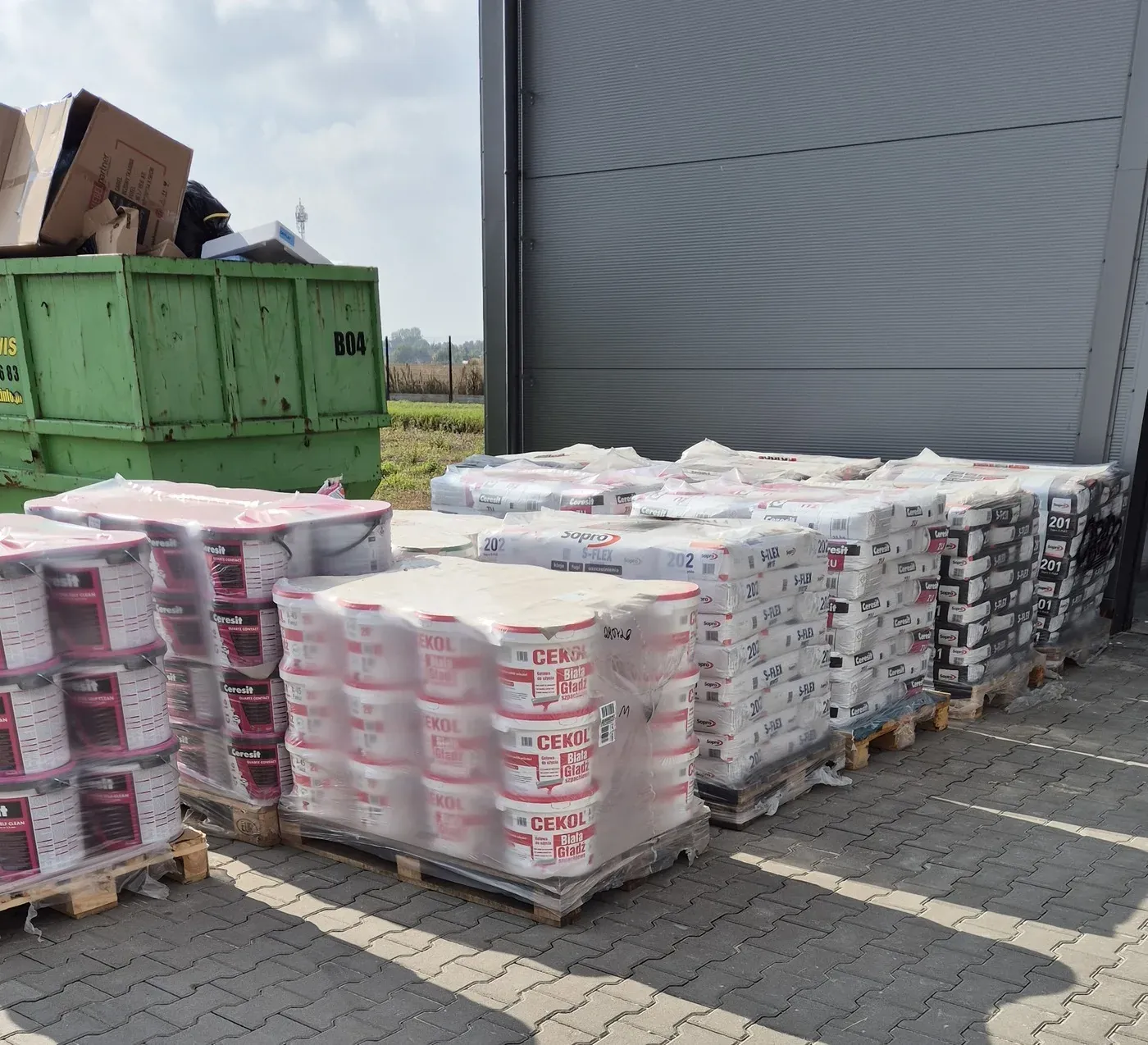
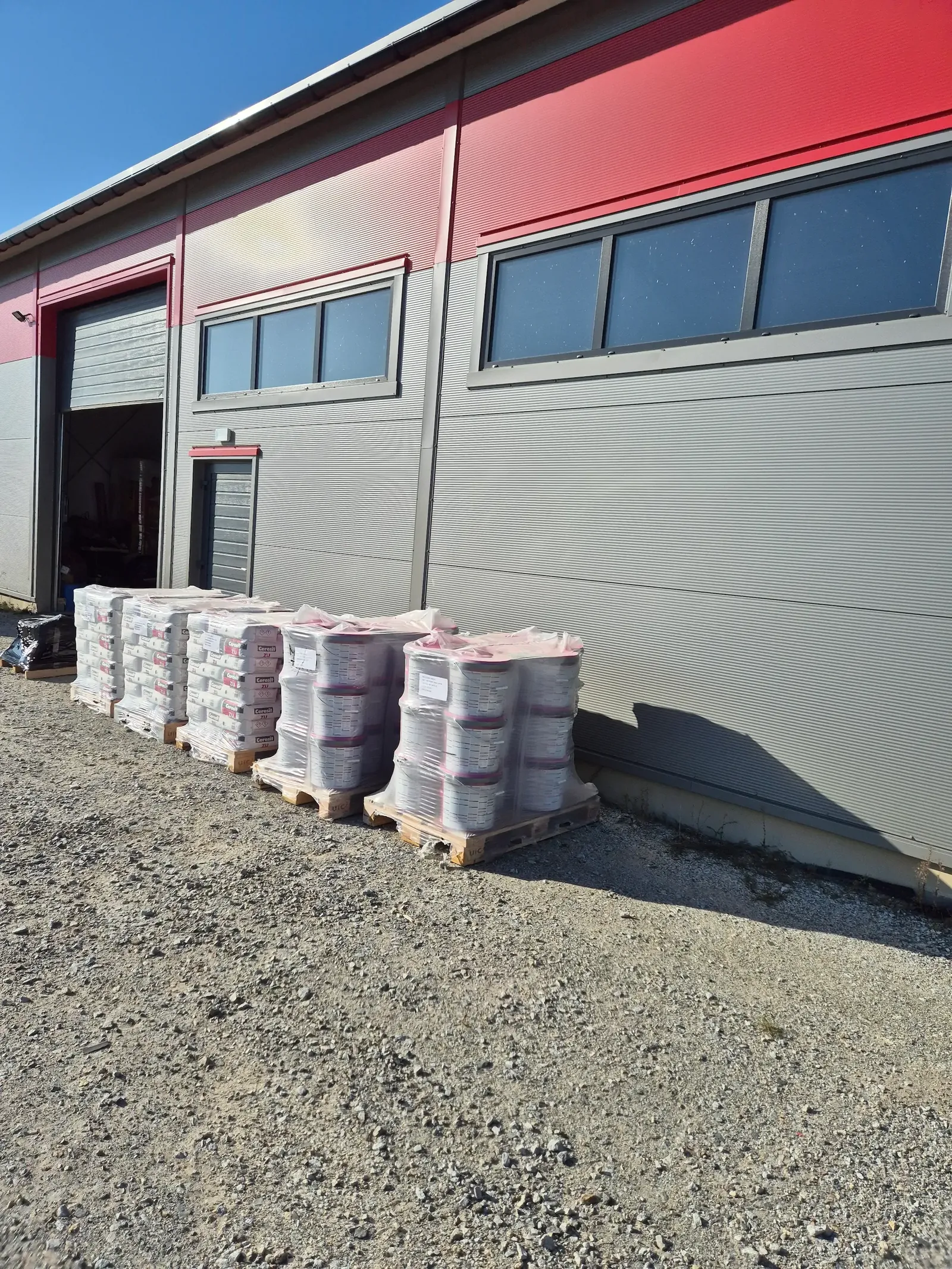
- Dry mixes in bags (adhesives, renders, screeds): keep on pallets, off the ground, under cover. Damp bags lose quality.
- Liquid products (primers, paints, dispersion adhesives, liquid waterproofing): protect from frost. Most are water-based and can be ruined if frozen.
- Mixing water: never use ice-cold water from outside containers.
- Rotation: use older stock first and check expiry dates.
When materials travel from Poland in winter, transport planning matters too. Frost-sensitive goods should not wait for days in an unheated yard.
How Actitrade helps
We supply winter and standard construction chemicals from proven Polish producers – tile adhesives, grouts, EPS adhesives, renders, screeds and primers – and deliver them to your yard or site in Ireland, Northern Ireland and the UK. We plan deliveries so that frost-sensitive products arrive when you can store them safely.
FAQ
What is the minimum temperature for tile adhesive?
Most standard cement-based tile adhesives need at least +5°C in the air, substrate and material. Winter versions can work at lower temperatures – check the product's data sheet.
Can you render in winter in Ireland?
Yes, on suitable days and with the right products, but thin-coat decorative renders need dry, frost-free conditions after application. Many contractors leave them for spring.
What happens if adhesive or render freezes?
Freezing water expands and breaks the fresh structure. The bond and strength can be permanently reduced, and the work may need to be removed.
Can frozen primer or paint be used?
Usually not. Water-based products that have frozen often separate and lose their properties. Check with the manufacturer.
Are winter adhesives more expensive?
They usually cost a little more than standard versions, but they save time on site and reduce the risk of repairs.
Read next:
- Polish Building Materials Supplier for Ireland & the UK
Need winter materials for a running project?
Send us your list – we will recommend the right winter products and prepare an offer with delivery dates. Contact us.