

Every internal wall needs a smooth, solid surface before decoration. In Ireland and the UK the two main options are dry lining with plasterboard and traditional wet plastering. In Poland and much of continental Europe, machine-applied gypsum plaster is the standard on new builds. So the real question is not only dry lining vs plastering – it is which method fits your walls, schedule and budget.
This guide compares all three and lists the materials each one needs.
What is dry lining?
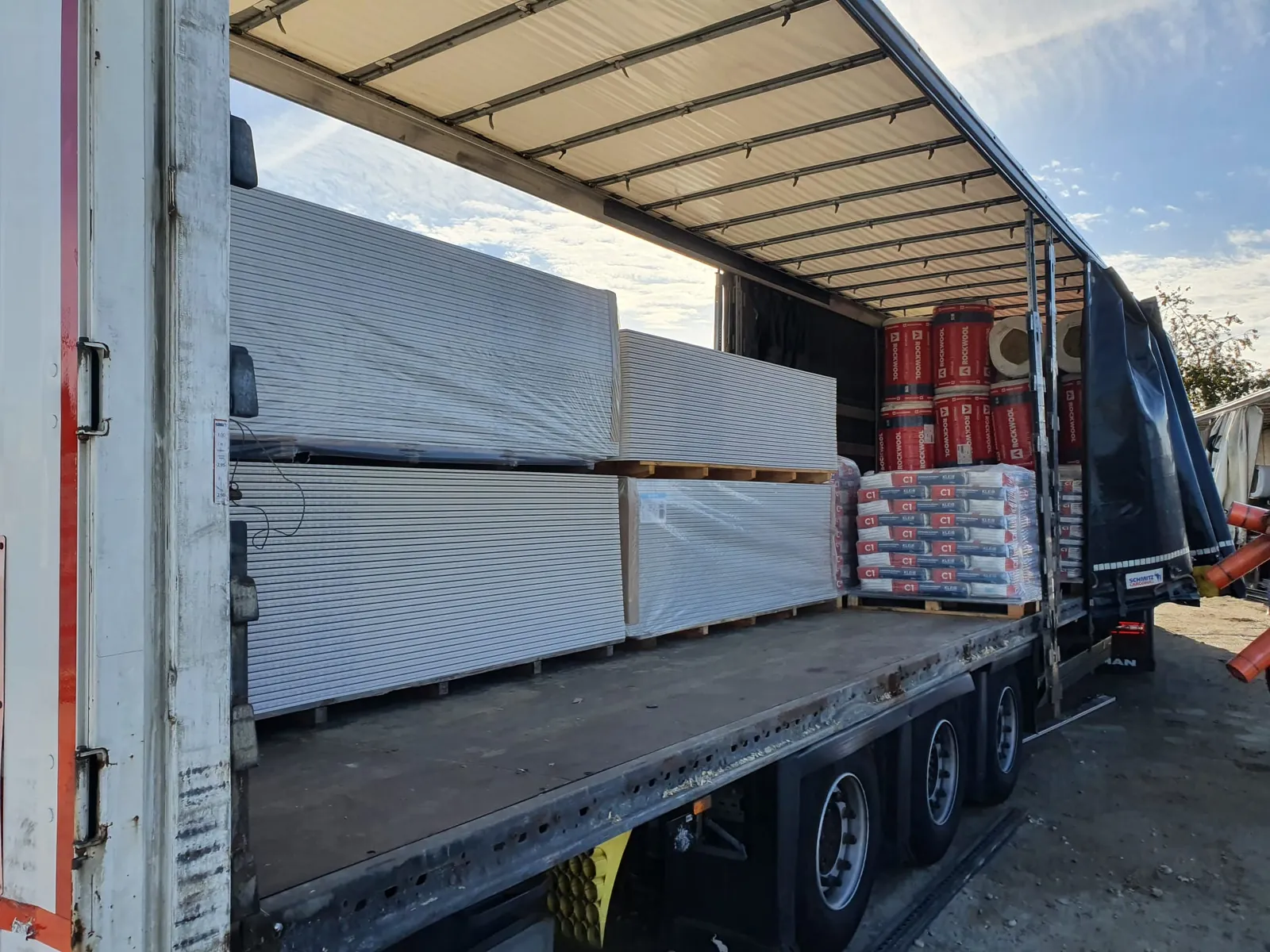
Dry lining means fixing plasterboard to walls and ceilings instead of applying wet plaster. Common methods:
- Dot and dab – boards bonded to masonry with blobs of adhesive
- Metal stud or furring systems – boards screwed to steel profiles, also used for partitions and ceilings
- Insulated plasterboard – boards with insulation bonded to the back, for internal wall insulation
Joints are finished either by tape and jointing or with a thin skim coat over the whole surface.
What is wet plastering?
Traditional wet plastering applies one or more layers of plaster directly to masonry, then a finishing coat. It gives a solid, seamless surface but uses water, so the walls must dry before decoration.
The third option: machine-applied gypsum plaster
In Poland, most new block and brick walls are finished with gypsum plaster sprayed by a plastering machine and levelled in one layer, typically 10–15 mm thick. On large, repeatable areas – apartments and housing schemes – a trained crew can cover a lot of wall in a day. The result is a smooth, solid wall ready for a thin finishing putty and paint.
Dry lining vs plastering: comparison
| Dry lining | Wet plastering (hand) | Machine gypsum plaster | |
|---|---|---|---|
| Speed | fast | slowest | fast on large areas |
| Water on site | almost none | high | medium |
| Drying time | almost none | long, especially in winter | shorter than traditional, but needed |
| Finish | joints need tape or skim | seamless | seamless |
| Impact strength | lower, depends on board | high | high |
| Heavy fixings | need suitable plugs or noggins | easy | easy |
| Uneven walls | handles large unevenness | limited | limited by layer thickness |
| Hides services | yes, on studs | no | no |
| Best for | refurbishments, partitions, ceilings, tight schedules | repairs, premium finishes, heritage work | new block walls, large repeatable areas |
When dry lining is the better choice
- Tight schedules – no drying time, especially in winter, when wet trades can hold a site up for weeks
- Very uneven walls in refurbishments
- Partitions and ceilings on metal frames
- Services – cables and pipes can run behind the boards
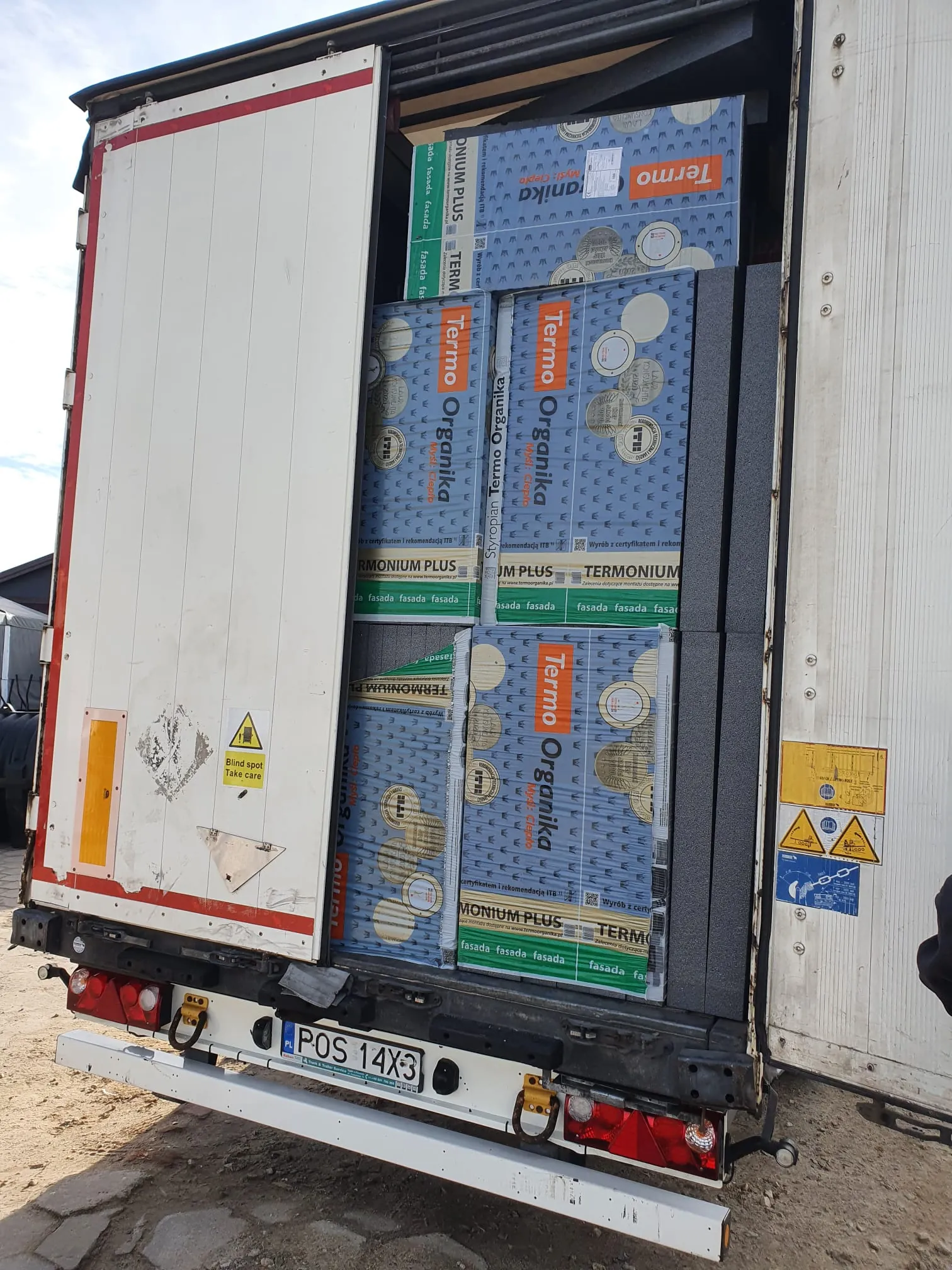
- Internal insulation – using insulated plasterboard
When plaster is the better choice
- New masonry with reasonable tolerances
- Durability – corridors, stairwells, rental properties where walls get knocked
- Heavy items – kitchen units, radiators, shelves can be fixed directly
- Seamless finish – no risk of joint cracks
Materials list
For dry lining: plasterboard (standard, moisture-resistant for wet areas, fire-rated, acoustic, insulated), metal studs and tracks or furring channels, screws, dry wall adhesive for dot and dab, joint tape, jointing compound, skim plaster or finishing putty, corner beads.
For gypsum plastering: gypsum plaster (machine or hand-applied), primers for the substrate, corner and stop beads, mesh for joints between different materials, finishing putty.
How Actitrade helps
We supply both systems from Polish producers – plasterboard and profiles, gypsum plasters, putties, primers, beads and fixings – often at lower cost than local sources. Everything is consolidated into one delivery to your yard or site in Ireland, Northern Ireland or the UK.
FAQ
Is dry lining cheaper than plastering?
Often yes, mainly because it is faster and needs no drying time. Material costs are similar; labour and time make the difference.
Which is stronger, plasterboard or plaster?
Plaster is harder and more impact-resistant. Plasterboard is strong enough for most rooms but needs suitable fixings for heavy items.
How long does wet plaster take to dry?
It depends on thickness, temperature and ventilation. In cold, damp weather drying can take weeks rather than days.
Can I tile on plasterboard?
Yes, with a suitable board for wet areas, primer, waterproofing in showers and a flexible C2 S1 adhesive. See Tile Adhesive Classes Explained.
What is machine gypsum plaster?
A gypsum plaster sprayed onto walls by a plastering machine and levelled in one coat. It is the standard method for new builds in Poland.
Read next:
- Winter Building Materials: Cold Weather Adhesives & Renders
- Order Building Materials from Poland for Q1 2027
- Pallet, FTL or Container: Delivery from Poland to Ireland
- Polish Building Materials Supplier for Ireland & the UK
Pricing a fit-out job?
Send us your material list or room areas – we will prepare an offer for dry lining, plaster or both. Contact us.