

At a glance: architectural concrete from Poland
- 🧱 The other feature-wall finish: where wood slat panelling brings warmth, architectural concrete brings the raw, industrial look increasingly specified in Irish apartments, offices and hospitality fit-outs.
- 🎛️ Two routes to the same look: prefabricated concrete panels fixed to the wall, or a trowel-applied decorative plaster system built up on site.
- 🎨 More colours than you'd expect: anthracite, graphite, patina and light greys, with metallic, gold or corten-rust aggregates worked into the surface.
- 🚚 Fragile freight: thin concrete panels are the one interior finish where corner protection and pallet stacking genuinely decide whether the order arrives usable.
The industrial counterpart to wood slat panelling
Our recent guide to decorative wall panelling and wood slat systems covered the warm, timber side of the feature-wall trend. Architectural concrete is its opposite number — the same design brief (one wall that carries the room), answered with a mineral, matt, deliberately imperfect surface. In practice Irish designers often use both in the same project: slats in the living area, concrete behind the TV or in the hallway.
Poland's decorative finishes industry produces both formats at scale — lightweight fibre-reinforced concrete panels in fixed formats, and bagged raw-concrete plaster systems supplied with their own primer and impregnation. The same consolidated groupage routes that carry render, adhesives and panelling to Irish sites carry these products too, which is what makes small-volume interior finishes worth importing at all.
1. Panels or plaster: choosing the format
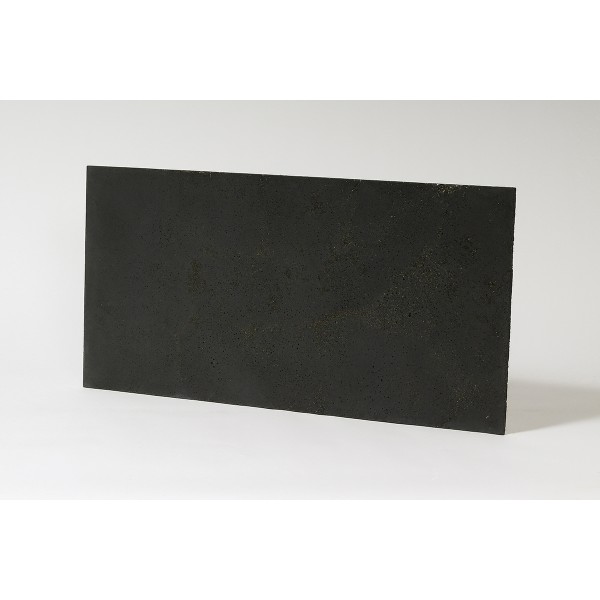
- Prefabricated panels: thin fibre-reinforced concrete boards in fixed formats (100 × 50 cm is a common one), finished in the factory and fixed to the wall with a flexible adhesive. Fast, predictable, and the surface is exactly what you saw in the sample.
- Decorative concrete plaster: a bagged system applied by trowel over a primed substrate, then sealed. No joints, follows curves and columns, but the result depends entirely on the applicator's hand.
- Aggregate and colour effects: silver, gold, black or corten-rust aggregates are worked into panel surfaces, so two panels of the same colour name can read very differently.
- Sample first, always: order a physical sample or a sample board before committing — screen photos of concrete finishes are close to meaningless.
2. Substrate, fixing and weight
Both formats need a sound, dry, dust-free substrate — plasterboard, plaster or render — and both are usually applied over the manufacturer's own primer. For panels, the adhesive matters as much as the panel: a flexible, high-grade tile adhesive is typically specified, and the manufacturer's technical sheet should confirm which classes are acceptable.
Weight per square metre is the number Irish installers ask about first, because it decides whether a plasterboard partition needs additional noggins or backing board behind the panel line. It varies significantly between products, so ask for it in writing rather than assuming a panel is "light because it's thin".
The fix that avoids a patchwork wall: order every panel for one wall from a single production batch, and dry-lay the whole wall on the floor before any adhesive is opened. Shade and aggregate distribution vary between batches by design — that variation is the look, but only if you control where it lands.
3. Sealing, use areas and transport
Most systems are supplied with an impregnation or sealer, and skipping it is the most common reason a concrete finish stains in a kitchen or bathroom. Confirm with the manufacturer which areas the product is approved for — splashbacks, wet rooms and external use all have different requirements, and a product suitable for a dry hallway may not be approved behind a hob.
As with any construction product placed on the EU market, ask for the CE marking and Declaration of Performance where the product type is covered by a harmonised standard, plus the reaction-to-fire classification if the panels are going into a commercial fit-out. For transport, thin panels travel on their edge, interleaved and corner-protected; ask your logistics partner to confirm how the pallet is built and to keep it off the bottom of a mixed groupage load.
| Format | Best suited to | Key specification point |
|---|---|---|
| Prefabricated concrete panels | Feature walls, reception areas, TV walls | Weight per m², adhesive class, batch |
| Decorative concrete plaster | Curved walls, columns, seamless areas | Applicator skill, primer and sealer |
| Sealed/impregnated systems | Kitchens, bathrooms, high-traffic areas | Approved use areas, cleaning regime |
Planning a concrete feature wall on your next project?
Actitrade sources architectural concrete panels, decorative plaster systems and their matching primers and sealers from established Polish manufacturers, consolidated with the rest of your finishing materials into one delivery to your Irish site.
Explore our finishing materials B2B offer or contact Actitrade to request samples and pricing.